Loft Conversion or House Extension: Which One Adds More Value to Your London Home?

London homeowners face a genuinely difficult question when they decide to invest in their property: go up, or go out? A loft conversion and a house extension can both transform a home — but they're very different bets. Different costs, different risks, different returns. And in a city where planning departments, terraced housing, and limited outdoor space all shape what's actually possible, the right answer depends heavily on your property and your neighbourhood.
We've been converting lofts and building extensions across North, East, and South London for over 20 years. Here's what we've actually seen.

The Case for a Loft Conversion
A loft conversion is the most efficient way to add space to a London home. You're not stealing garden, you're not negotiating with planners for months, and in most cases you're not even applying for planning permission — the majority of loft conversions fall under permitted development rights.
The economics are compelling. A well-executed dormer conversion in a Victorian or Edwardian terrace — the bread-and-butter of North London housing stock — typically costs between £45,000 and £75,000 and can add 10–20% to your property's value. On a £700,000 home, that's potentially £70,000–£140,000 in added value for a relatively contained outlay.
But the number that really matters isn't the percentage uplift — it's what you're adding. A fourth bedroom in a three-bedroom London terrace is a transformative asset. Families searching in areas like Muswell Hill, Crouch End, or Walthamstow will pay a premium for that fourth room. Estate agents will tell you the same thing: bedroom count drives search filters, and search filters drive viewings.
What a loft conversion works best for:
Victorian and Edwardian terraces and semis with adequate ridge height (you need at least 2.2m from floor joist to ridge to make it viable)
Adding one or two bedrooms, a home office, or a master suite with en-suite
Homeowners who want to retain their garden
Projects that need to move quickly — a well-run loft conversion takes 8–12 weeks
Where it falls short:
If your loft has limited headroom or a complex roof structure, options narrow and costs climb
You're unlikely to get an open-plan living space — lofts suit rooms, not large flowing areas
Hip-roof properties need a hip-to-gable conversion first, which adds cost

The Case for a House Extension
A rear or side extension does something a loft can't: it changes how you live in your home day-to-day. The single biggest driver of extension projects we see is the kitchen-diner. Open-plan ground-floor living — a kitchen that opens onto a dining area, onto a garden, with bi-fold or sliding doors — has become the defining feature of the modern London family home.
Extensions are more expensive. A well-specified single-storey rear extension in London typically runs £60,000–£120,000, and a two-storey extension more still. They also take longer: factor in planning permission (typically 8 weeks, assuming a clean approval), and you're looking at a 4–6 month project from start to finish.
The return on investment is less predictable than a loft conversion. A beautifully designed extension that creates an incredible kitchen-diner can absolutely recoup its cost — and more — in the right property and market. But it can also over-improve a house relative to its street, or fail to add bedroom count in a market where buyers are filtering by rooms.
What an extension works best for:
Detached or semi-detached homes with meaningful garden or side return space
Creating open-plan ground-floor living
Adding accessible ground-floor space (relevant for multigenerational households or future-proofing)
Properties where the loft has already been converted or isn't viable
Where it falls short:
Planning permission is required for most extensions, and not all councils are straightforward
Terraced houses in conservation areas face tighter constraints
A large extension on a smaller house can eat the garden and still not recoup costs
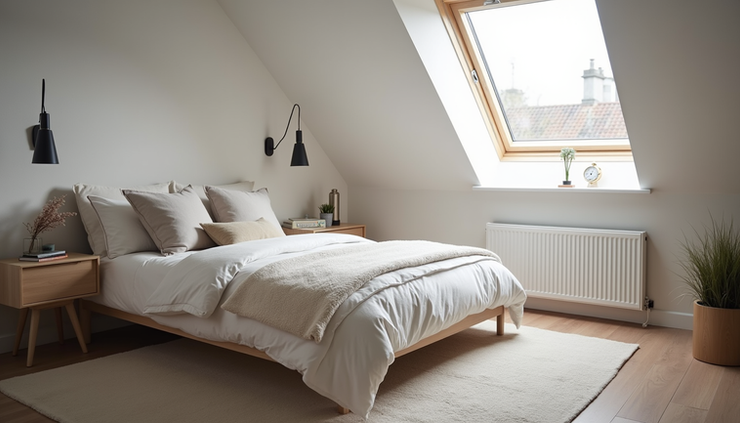
Loft Conversion Value London: Is an Extension Worth More?
Loft conversions are typically the more affordable option, coming in at £45,000–£75,000+ versus £60,000–£120,000+ for a house extension. They're also significantly faster — a well-run loft conversion takes 8–12 weeks, while an extension, once you factor in planning permission and construction, is a 4–6 month commitment.
The planning picture is where the gap really opens up. Most loft conversions fall under permitted development, meaning no planning application, no 8-week wait, no risk of refusal. Extensions almost always require permission — and in conservation areas or on certain property types, that's not a formality.
On value, loft conversions tend to deliver a more predictable return: typically 10–20% added to your property's value. Extensions can match or beat that, but the return varies more widely depending on what you're building and what your street will support. The other trade-off is your garden — a loft conversion takes nothing from your outdoor space, while an extension will.
The short version: if you want bedrooms, a home office, or a master en-suite with a faster, lower-risk route to adding value, the loft wins on almost every metric. If you want open-plan ground-floor living and a kitchen that connects to your garden, an extension is the one — just go in with eyes open on cost, time, and planning.
The Question Nobody Asks (But Should)
Before debating loft vs extension, ask yourself: what does your street look like?
In London, your immediate postcode sets a ceiling on what buyers will pay. If every house on your road is a three-bedroom terrace selling for £650k–£700k, converting your loft to add a fourth bedroom may push your home into a different buyer pool entirely. That's good. But spending £120,000 on an extension to create a spectacular kitchen when the ceiling price on the road is £700k is a much riskier bet.
We always recommend homeowners speak to a local estate agent before they brief an architect or builder. Not to ask "should I do it?" — but to ask "what does this street respond to?" That conversation costs nothing and can save you tens of thousands.
Can You Do Both?
Yes — and it's often worth it. A combined loft conversion and rear extension, done as a single project, typically saves 10–15% compared to doing each separately (shared scaffolding, shared project management, shared building control costs). If your home is genuinely under-spaced and you're planning to stay for five or more years, a combined project often makes the most financial and practical sense.
What We'd Recommend
If your home has a viable loft and you need more bedrooms: start with the loft. The returns are more predictable, the disruption is lower, and the planning risk is minimal.
If your home already has the bedroom count but the ground-floor feels cramped: an extension will transform your quality of life more than the loft would — and in the right property, the return is there too.
If you're not sure: talk to us. We offer free initial surveys across London, and we'll tell you honestly what makes sense for your property — including if the answer is neither.
Comments